Table of Contents
ToggleA luxury kitchen island isn’t just a prep surface, it’s the centerpiece that anchors your entire kitchen, blending style, function, and sophistication. Whether you’re hosting dinner parties or cooking family meals, a well-designed island elevates both the aesthetic and usability of your culinary space. For homeowners looking to invest in a high-end kitchen renovation, understanding what separates a luxury island from a standard one is essential. This guide walks you through the materials, features, design approaches, and practical considerations needed to create a truly luxurious kitchen island that works as hard as it looks.
Key Takeaways
- A luxury kitchen island combines premium materials (marble, granite, engineered quartz), solid wood cabinetry, and impeccable craftsmanship to serve as both a functional workspace and an elegant centerpiece.
- Integrated appliances, smart technology features (wireless charging, USB ports, networked lighting), and efficient storage solutions elevate luxury islands beyond standard prep surfaces.
- Proper layout and clearance (36–48 inches of walkable space on all sides) are essential to ensure your luxury island functions beautifully without compromising kitchen traffic flow.
- Luxury kitchen island costs range from $3,000 to $15,000+ depending on size, materials, and features, with custom builds requiring 8–12 weeks and offering superior durability and resale value.
- Design intentionality—whether contemporary minimalism, transitional blending, farmhouse warmth, or two-tone styling—ensures your luxury island reinforces your home’s overall aesthetic and personal lifestyle.
What Makes a Kitchen Island Truly Luxurious
A luxury kitchen island combines carefully selected materials, impeccable craftsmanship, and thoughtful design that extends beyond trends. It serves as both a functional workspace and a statement piece, often defining the entire kitchen’s character. Unlike standard islands, luxury versions prioritize quality over quick assembly, durability over disposable trends, and intentional design over cookie-cutter layouts.
The investment in a luxury island pays dividends through longevity, resale appeal, and daily satisfaction. High-end islands typically feature custom cabinetry, premium countertops, integrated appliances, and finishes that withstand heavy use without showing wear. They’re designed to complement the home’s overall architecture and your personal lifestyle rather than fight against it.
Premium Materials and Finishes That Define Luxury
Countertop materials set the tone for luxury. Marble, granite, and engineered quartz with high-end finishing are industry standards. Marble offers timeless elegance but requires sealing and careful maintenance, a trade-off homeowners weigh carefully. Granite provides durability and natural variation, with costs ranging from $60–$150 per square foot installed. Engineered quartz (brands like Caesarstone or Silestone) delivers consistent aesthetics, non-porous surfaces, and stain resistance without the upkeep marble demands.
Base cabinetry in luxury islands uses solid wood, typically cherry, walnut, white oak, or mahogany, over plywood or MDF. The wood should be kiln-dried to standard moisture content (around 6–12%) to prevent warping or movement after installation. Custom inlays, dovetail joinery (interlocking joints that are stronger than pocket holes), and hand-finished details separate luxury builds from production-line alternatives.
Finishes matter enormously. A luxury island might feature lacquered or hand-rubbed stains that develop patina over time, or matte powder-coated metal frames paired with natural wood. Two-tone islands, contrasting base and countertop colors, add visual interest without sacrificing sophistication. Leather-wrapped or brass hardware ties finishes together thoughtfully rather than grabbing whatever was on sale.
Backsplash and decorative elements round out material quality. Subway tile, marble slabs, or custom tile work (like Moroccan patterns or hand-painted ceramics) anchor the design. Edge profiles on countertops, whether a simple straight edge, beveled edge, or ornate ogee, signal luxury through precision craftsmanship.
High-End Features and Smart Technology Integration
Modern luxury islands integrate functionality that goes beyond a cutting board and stove. Integrated appliances, cooktops, dishwashers, wine coolers, or beverage centers, transform islands into true workstations. A built-in induction cooktop (cooler to the touch, faster heating, precise temperature control) paired with a downdraft or overhead ventilation system keeps your kitchen smoke-free and comfortable. Some homeowners install a separate prep sink with a pot filler faucet, turning the island into a secondary food-prep zone.
Smart technology enhances usability without compromising aesthetics. Wireless charging pads integrated into the countertop, outlets with USB charging ports, or a subtle tablet mount for recipes keep devices accessible yet hidden. Some high-end builds include networked lighting, dimmable LED strips under the countertop overhang or recessed lights in the soffit, that you control via app or voice command.
Storage solutions in luxury islands maximize space efficiently. Deep drawers with soft-close hinges (hydraulic dampers that prevent slamming) accommodate pots, pans, and serving dishes. Spice racks built into the island’s end panel, open shelving for display, or a closed pantry section tucked underneath keep essentials organized. Dividers and organizational inserts (customized to your cookware) prevent the “junk drawer” effect and maintain the polished appearance.
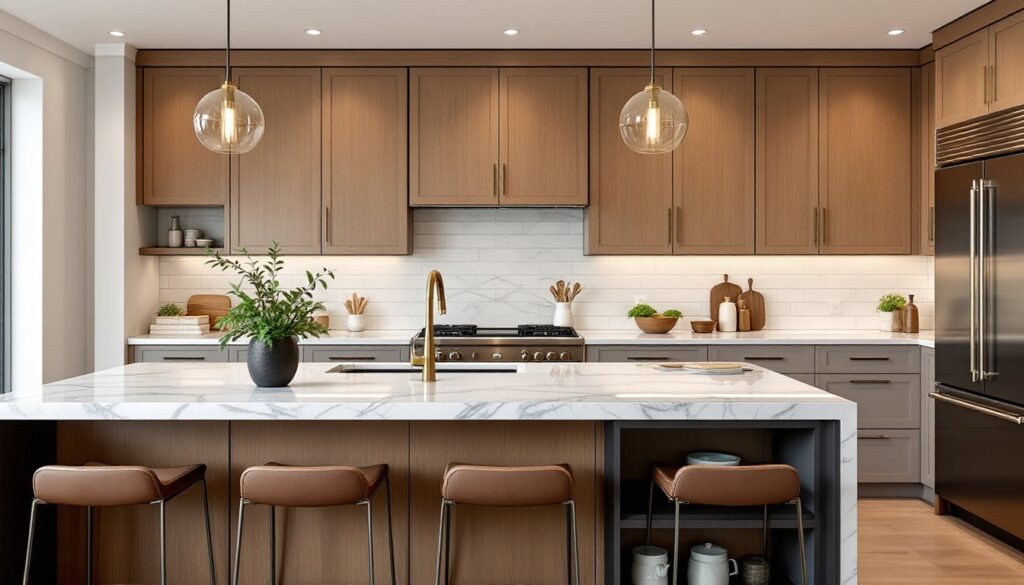
Some high-end islands feature a seating area with a breakfast bar, typically 36 inches high for standard bar stools. Luxury builds often extend this seating with upholstered bar stools in leather or performance fabrics that resist staining. Knee space beneath the overhang should be at least 15 inches deep to ensure comfortable seating: 18–24 inches is even better. Waterfall edges (where the countertop wraps down the side of the island) create a cohesive, designer-approved visual that’s become synonymous with luxury modern kitchens.
45 inspiring kitchen island ideas from top designers showcase how high-end features integrate seamlessly into functional spaces, balancing aesthetics with everyday usability.
Design Styles and Aesthetic Approaches for Upscale Islands
Luxury kitchen islands adapt to countless design philosophies, from contemporary minimalism to rustic farmhouse elegance. The key is intentionality, every line, color, and material choice should reinforce your home’s overall design language.
Contemporary luxury islands prioritize clean lines, minimal ornamentation, and integrated functionality. Think flat-panel cabinetry in matte black or white, waterfall edge countertops in solid quartz, and handleless drawers (push-to-open mechanisms). Lighting is subtle, recessed LEDs or a low-profile pendant, and the island often features a contrasting material (wood base with stone countertop) that grounds the design.
Transitional islands blend traditional craftsmanship with modern simplicity. These feature raised panels or shaker-style cabinet doors (timeless, versatile cabinet construction), classic hardware (brushed brass or oil-rubbed bronze), and warm-toned wood or painted finishes. A transitional island bridges the gap between farmhouse coziness and modern efficiency, making it a popular choice for mixed-era homes.
Transitional kitchens often work well with 55 elegant kitchen island ideas that showcase how understated luxury blends traditional and contemporary elements throughout the space.
Farmhouse and rustic luxury islands embrace natural wood tones, distressed finishes, and open shelving that displays handcrafted elements. Reclaimed or hand-hewn wood bases, butcher-block countertops (requiring mineral oil maintenance), and vintage-inspired hardware create warmth. These islands work beautifully in period homes or open-concept spaces where the kitchen is on display.
Mediterranean and transitional farmhouse styles might feature arched openings, decorative corbels (brackets that support the overhang), or tile work inspired by Old World aesthetics. Color palettes emphasize warm creams, terra cotta accents, or muted blues and greens.
Two-tone islands, such as white cabinetry with a walnut countertop, or charcoal base with white marble top, add visual depth without overwhelming a space. This approach is particularly effective in open-concept homes where the island is a visual anchor.
Lighting above the island contributes significantly to its luxury feel. Pendant lights (hung 30–36 inches above the countertop for a bar, 36–40 inches for a prep surface) in brass, glass, or custom designs define the style. A statement chandelier transforms the island into art: understated, sculptural pendants keep focus on the materials and craftsmanship beneath.
Layout and Space Considerations for Your Luxury Island
Proper layout ensures your luxury island functions beautifully, not just looks impressive. Building codes and practical measurements prevent costly mistakes after installation.
Clearance is non-negotiable. The International Residential Code (IRC) recommends at least 36 inches of walkable space on all sides of the island: 42–48 inches is ideal for two-way traffic and multiple cooks. If your kitchen is narrow or open to adjacent rooms, measure twice before committing to an island size. A stunning island that makes your kitchen impassable defeats its purpose.
Island size typically ranges from 24 inches to 48 inches deep and 3 to 6 feet long, depending on your kitchen’s footprint. Oversizing is a common mistake, a 5-foot island in a 12-by-12 kitchen dominates the space and reduces usable counter area elsewhere. Undersizing, conversely, limits functionality and visual impact. Sketch your layout to scale (or use design software) and imagine walking around the island while carrying dishes or cooking.
Electrical and plumbing considerations dictate placement if you’re adding a sink or cooktop. Running new circuits for appliances and supply lines for water requires accessing floors below, simpler if the island sits over a basement or unfinished space, more complex on a slab or above a finished ceiling. Consult a licensed electrician or plumber early: their expertise prevents expensive replumbing or rewiring after installation.
Slab versus pier foundations affect stability and cost. A solid base (slab or concrete pier) supports heavy countertops and built-in appliances better than four isolated feet. If your island is heavy (think marble countertop + solid wood cabinetry), reinforcement in the floor structure may be necessary.
Look at 25 luxury kitchen island examples to see how professional designers handle spatial relationships, traffic flow, and visual proportion in different kitchen sizes. The scale and placement of these islands reflect thoughtful space planning, not just aesthetic preference.
Budgeting and Installing Your Luxury Kitchen Island
Luxury kitchen islands range from $3,000 to $15,000+ depending on size, materials, and integrated features. A custom-built island with premium countertops, integrated appliances, and custom cabinetry will cost more than a semi-custom or stock island, but the durability and resale value justify the investment.
Material costs break down roughly as follows: solid wood cabinetry ($1,500–$4,000), premium countertops ($2,000–$5,000 for marble or high-end quartz), hardware and fixtures ($500–$1,500), and integrated appliances ($1,000–$4,000). Labor for custom builds typically adds 40–60% to material costs, varying by region and contractor experience.
DIY versus professional installation depends on your skill level. Building a basic island frame from lumber is achievable for experienced DIYers: finishing surfaces, integrating appliances, and running electrical or plumbing requires licensed professionals in most jurisdictions. Permits are often required for islands that include built-in appliances or plumbing, check with your local building department before purchasing materials. Skipping permits risks failed inspections, complications during home sales, and voided warranties.
Pre-fabricated or semi-custom islands (like luxury home listings showcase) offer middle ground, faster installation, lower cost, some customization options, without full custom pricing. These are ideal if you’re working within a timeline or budget but still want quality materials and finishes.
Timeline matters. Custom builds require design consultations, material ordering, and lead times (especially for specialty finishes or imported materials). Budget 8–12 weeks for a fully custom island, 4–6 weeks for semi-custom, and 1–2 weeks for pre-made units delivered and installed.
Maintenance budgets factor into long-term costs. Marble and other natural stone require annual sealing ($100–$300 per application). Quartz is nearly maintenance-free. Wood finishes may need refinishing every 5–10 years depending on use and finish type. Factor these ongoing costs into your decision when selecting materials.
Work with kitchen designers or contractors experienced in luxury projects. They’ll help you navigate material choices, code requirements, and spatial constraints, expertise that saves money and headaches.
Conclusion
A luxury kitchen island is a significant investment that transforms how you cook, entertain, and move through your home. By prioritizing premium materials, thoughtful design, and functional features that suit your lifestyle, you’ll create an island that remains beautiful and useful for decades. Start with honest assessment of your space, budget, and needs, then work with experienced professionals to bring your vision to life. The result isn’t just a kitchen upgrade: it’s a centerpiece that defines your home’s character and daily experience.