Table of Contents
ToggleLuxury curtains are far more than window dressing, they’re the foundation of a serene bedroom retreat. The right premium curtains control light, regulate temperature, dampen outside noise, and set the aesthetic tone for your entire space. Whether you’re starting fresh or upgrading tired drapes, understanding the difference between standard and luxury window treatments helps you invest wisely. This guide walks you through materials, features, styles, and installation so you can choose curtains that blend beauty with genuine performance.
Key Takeaways
- Luxury curtains for bedroom should be made from 100% natural fibers like linen, silk, cotton velvet, or wool blends, which drape better and age gracefully than polyester alternatives.
- High-quality lined curtains with blackout and thermal insulation linings can last 5-10 years while blocking 95-99% of light and reducing heat transfer by 20-25%, making them a worthwhile long-term investment.
- Proper custom sizing, weighted hems, and sturdy hanging hardware rated for heavy fabric are essential features that separate true luxury window treatments from standard curtains.
- Gentle maintenance through dry-cleaning only, regular vacuuming with upholstery attachments, and proper storage in breathable garment bags protects your investment and extends the lifespan of luxury curtains.
- Layering lightweight sheers with blackout panels and coordinating curtains with bedding and architectural elements creates a cohesive, hotel-like bedroom aesthetic that feels more luxurious and timeless.
Understanding Luxury Curtain Materials and Fabrics
The foundation of any luxury curtain is the fabric itself. High-end bedroom curtains typically start at 100% natural fibers, linen, silk, cotton velvet, or wool blends, rather than polyester blends. Natural fabrics drape better, age gracefully, and feel substantial in your hand, which is why they command higher prices.
Linen is breathable and creates a soft, relaxed look ideal for modern or farmhouse bedrooms. It wrinkles naturally, which adds character but requires acceptance of an informal aesthetic. Silk offers unmatched elegance and light refraction, though it demands careful cleaning and fades if exposed to direct UV. Cotton velvet provides plush weight and sound absorption without silk’s fragility, a practical luxury choice. Wool blends excel at insulation and are naturally flame-retardant, making them safer around children.
The weave also matters. A tight, high thread-count construction (600+ threads per inch) resists sagging and maintains shape through years of opening and closing. Jacquard weaves, where patterns are woven in rather than printed, show sophisticated texture and resist fading better than surface prints.
How Fabric Quality Affects Durability and Appearance
Luxury fabrics resist pilling, color loss, and stretching far better than budget options. A quality lining, typically linen or cotton sateen, protects the face fabric from UV damage, prevents show-through, and adds weight for better drape. Unlined luxury curtains fade noticeably within 2-3 years if facing south or west: lined versions stay vibrant for 5+ years.
Thicker, denser fabrics (8-12 ounces per square yard) hold their shape after repeated use. Lighter fabrics (3-5 oz.) wrinkle more easily but offer a lighter, airier feel if that suits your design. Check the fiber content label and feel the weight, luxury curtains shouldn’t feel papery or flimsy.
Essential Features of High-End Bedroom Curtains
Beyond fabric, luxury curtains include features that justify their price. Blackout linings (typically a thick acrylic or polyester layer) block 95-99% of light, essential for quality sleep and temperature control. This lining is usually glued or sewn to the face fabric and adds approximately 2-3 inches to the finished width.
Thermal insulation in the lining reduces heat transfer by 20-25%, lowering energy costs and keeping your bedroom quieter. Homes in cold climates see measurable heating savings: warmer regions benefit from reduced AC strain on summer mornings.
Custom sizing is non-negotiable for luxury installations. Ready-made curtains come in standard widths (54″, 63″, 84″, 96″), but bedrooms rarely match these exactly. A professional curtain maker can craft panels to your exact specifications, say, 48″ wide by 88″ long, ensuring they puddle gracefully on the floor (adding 1-2 inches of fabric for a pooling effect) or kiss the floor cleanly.
Weighted hems, brass or steel weights sewn into the bottom edge, keep curtains from shifting and tangling in wind or when closing. They’re invisible but make a tangible difference in how your curtains hang and move.
Look for finished edges on the selvage (side seams), properly stitched hems with a double-fold construction, and reinforced header pockets or ring-tape systems that won’t rip under the weight of heavy fabric. These details show craftsmanship.
Choosing the Right Style and Design for Your Space
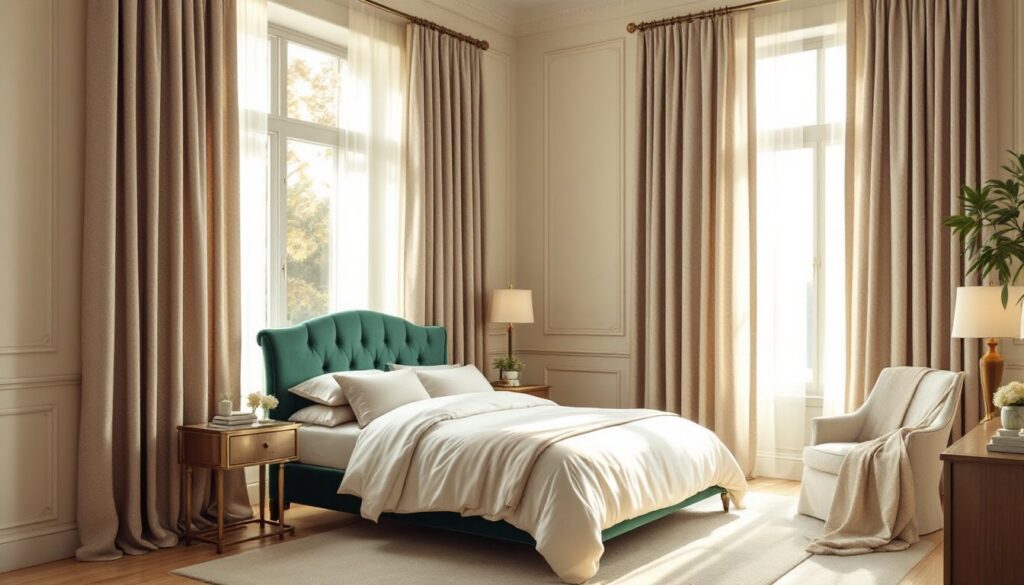
Your bedroom’s aesthetic guides the curtain style. Floor-to-ceiling curtains with minimal pattern create a formal, hotel-like elegance: choose neutral tones (ivory, soft gray, warm taupe) to avoid overwhelming the space. Designers at ELLE Decor’s master bedroom curtain collection showcase how understated fabrics in rich colors anchor luxury bedrooms without visual clutter.
Layering separates luxury from basic. Combine lightweight sheers with heavy curtains to adjust light and privacy independently. A sheer linen layer diffuses morning light while a velvet or linen blackout panel controls sleep-time darkness. This approach offers flexibility without compromising aesthetics.
Subtle patterns, tone-on-tone damasks, geometric jacquards, or textured herringbone weaves, add interest without creating visual noise. Bold patterns date quickly: micro-patterns and neutral colorways remain timeless. Solids in deep jewel tones (emerald, sapphire, burgundy) feel inherently luxurious and match most bedroom palettes.
Hanging hardware matters as much as fabric. Brass, brushed nickel, or wrought-iron rods with quality finials anchor the look. A sturdy rod rated for the weight of your curtains (heavy velvet requires stronger support than linen) prevents sagging. Mount rods close to the ceiling and extend 8-12 inches past the window frame on each side to maximize light when fully open.
Homify’s bedroom design ideas illustrate how coordinating curtain styles with bedding, headboards, and accent walls creates cohesive luxury interiors. Consistency across textures and color families ties your entire room together.
Installation and Maintenance Tips for Luxury Curtains
Professional installation isn’t always necessary, but it’s worth considering if your windows are large, non-standard, or if you’re hanging heavy velvet panels. An experienced installer ensures rods are perfectly level, curtains stack neatly when open, and hems hit the floor evenly. DIY installation works for standard windows, just measure twice, locate studs or use heavy-duty anchors rated for 50+ pounds per anchor, and invest in a quality tape measure, level, and cordless drill.
Before hanging, inspect the windows and sills. Dust, cobwebs, and old residue affect how curtains hang and invite dust accumulation. Wipe clean and let dry completely.
Thermal-lined luxury curtains need gentle care to preserve their investment. Dry-clean only (not launder) unless the manufacturer explicitly approves washing. Dry-cleaning preserves sizing and shape: standard washing can shrink linings or distort the weave. Between cleanings, vacuum curtains gently with an upholstery attachment to remove dust. Rotate panels occasionally to ensure even fading if you can’t avoid sun exposure.
Keep curtains away from direct radiator heat and air conditioning vents, which dry fibers and cause premature aging. If your bedroom has humidity (bathrooms nearby, condensation on windows), run a dehumidifier to prevent mildew or mold growth in the folds.
Storage matters if you ever remove or replace them. Use acid-free tissue paper to stuff folds loosely, then store in a breathable garment bag in a cool, dark closet. Never fold and seal in plastic: trapped moisture invites mildew.
Maximizing Your Investment in Premium Window Treatments
Luxury curtains are a long-term investment, so buy the best quality your budget allows rather than settling for mid-range options. A mid-range $800 pair might last 3-4 years: a true luxury $2,500+ custom set with quality lining, professional tailoring, and hardwearing natural fibers often lasts 7-10 years. Spread over that lifespan, the cost-per-year evens out.
Consider the entire window treatment system, not just the curtains. A quality motorized rod or smart curtain track, increasingly common in luxury homes, adds convenience and even improves thermal control by automating open/close schedules. Motorized systems cost $600-2,000 but integrate beautifully with home automation.
Pairing curtains with cellular shades or roller shades underneath provides a sleek, layered look and gives you blackout control without always relying on heavy curtains. This flexibility extends the life of your curtains by reducing daily open-close cycles.
Monitor seasonal changes. Winter heat loss through windows can be offset by fully closed, insulated curtains at night: opening them during sunny winter days leverages passive solar gain. In summer, keep them closed during the hottest part of the day. This conscious use extends both the life of your curtains and your comfort.
Architectural Digest’s luxury home design coverage regularly features bedrooms where premium curtains anchor the overall aesthetic. Study high-end interiors to understand how professionals style, scale, and maintain luxury curtain installations.
Conclusion
Luxury curtains transform a bedroom from purely functional to genuinely restful. Investing in natural fibers, quality linings, professional tailoring, and thoughtful hardware creates a statement that lasts years, not seasons. Whether you choose linen, silk, or velvet, the fundamentals remain: measure meticulously, inspect the finished seams, understand the care requirements, and treat them as the architectural element they are, not just temporary decor. With proper selection and care, premium curtains become as much a part of your home’s soul as the walls themselves.