Table of Contents
ToggleBathroom floors take a beating. Water splashes from the shower, humidity lingers in the air, and you need something that won’t buckle, stain, or require constant sealing. That’s where luxury vinyl tile (LVT) comes in. Once dismissed as a cheap alternative to ceramic or stone, modern LVT has evolved into a legitimate choice for serious DIYers and homeowners. It’s waterproof by design, looks convincingly like the real thing, and installs without the complexity of tile. This guide walks you through what makes LVT smart for bathrooms, how to pick the right style, and what you need to know before installation.
Key Takeaways
- Luxury vinyl tile flooring for bathrooms offers superior water resistance through its rigid, impermeable core, eliminating the moisture-trapping issues of grout lines found in ceramic tile.
- LVT requires minimal maintenance compared to tile or stone—no grout sealing, no special conditioning—making it ideal for busy homeowners who want a practical, low-effort bathroom floor.
- Proper installation of luxury vinyl tile depends on meticulous subfloor prep, underlayment selection, and sealing seams with waterproof silicone caulk, which directly impacts long-term durability and prevents water damage.
- Modern LVT designs convincingly replicate marble, slate, wood, and concrete aesthetics while delivering 15–20 years of performance at a lower cost than natural materials.
- Choose matte or textured LVT finishes with ASTM slip resistance ratings of 0.5 or above for improved safety and water spot resistance in moisture-heavy bathroom environments.
- DIYers can successfully install luxury vinyl tile using either click-lock or glue-down systems with basic hand tools, though acclimation time and careful layout planning are critical to avoiding gaps and buckling.
Why Luxury Vinyl Tile Is Perfect For Bathroom Flooring
Luxury vinyl tile sits between standard vinyl sheet flooring and ceramic tile on both the cost and durability spectrum. It consists of multiple layers: a printed design layer, a rigid core (usually limestone composite or PVC), and a protective wear layer rated typically between 12 and 20 mils thick. The rigid core is the key innovation that distinguishes LVT from older vinyl flooring, it resists moisture penetration and provides better dimensional stability than flexible materials.
Bathrooms create conditions that challenge many flooring types. Ceramic tile is cold underfoot, grout lines trap moisture and mold, and it’s unforgiving if you drop something. Real stone or marble requires sealing and professional installation. LVT doesn’t suffer any of those weaknesses. It’s warm to walk on, completely waterproof at the plank or tile level, and the seams are sealed during installation, not grouted. A homeowner with basic handtool skills can install LVT in a weekend, no special equipment, no mortar, no grout cure time.
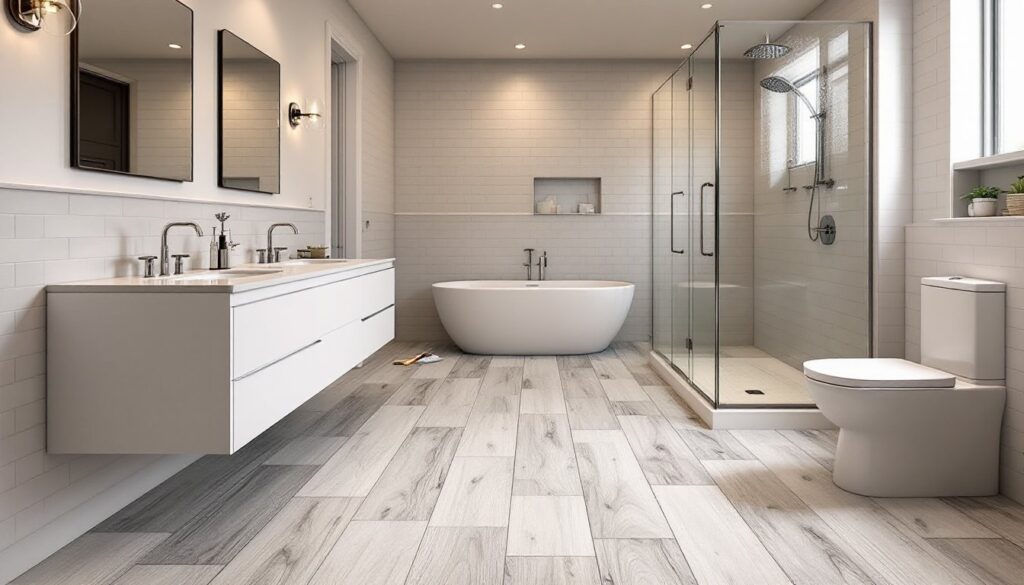
The aesthetic advantage matters too. Modern LVT designs convincingly replicate everything from slate and marble veining to wood grain and concrete texture. You get the visual payoff of high-end materials without the maintenance burden or the cost.
Key Benefits Of LVT In Moisture-Heavy Spaces
Water Resistance And Durability
True water resistance is the non-negotiable feature for any bathroom flooring. LVT achieves this through its rigid, impermeable core. Unlike ceramic tile (which is waterproof on its surface but porous underneath, allowing water into grout lines and the subfloor), LVT doesn’t absorb water at all. The plank or tile itself is chemically inert. That said, installation technique matters, unsealed seams or improper underlayment can let water wick into the subfloor underneath, which is why prep work and sealing the seams with silicone are non-negotiable.
The wear layer, typically a clear, hard plastic coating on top of the print, also resists staining, scratching, and UV fading. Most commercial-grade LVT carries a 10- to 20-year warranty against wear-through. In residential bathrooms with normal use, you can reasonably expect 15–20 years of performance.
Durability goes beyond water resistance. LVT resists denting and indentation better than softer vinyl, though it won’t match concrete or tile in absolute hardness. A toilet base won’t sink into it over time like it might into budget vinyl sheet flooring. Heavy rolling carts or dropped tools can dent or crack LVT, but damage is typically localized to the affected plank and doesn’t spread.
Easy Maintenance And Cleaning
Maintenance is where LVT shines compared to tile. There’s no grout to scrub, bleach, or reseal. Cleaning means vacuuming up dust and debris, then wiping with a damp mop or cloth using a pH-neutral floor cleaner. Avoid excessive standing water and acidic or oil-based cleaners, which can dull the wear layer. Squeegee water off after showers to prevent mineral deposits and prolong the protective coating.
Unlike natural stone, LVT doesn’t need annual sealing or special conditioning. No grout resealing every 2–3 years. For most homeowners, this alone justifies the choice. You’re spending time using the bathroom, not maintaining the floor. Stains from soap, shampoo, or minor spills wipe away easily, and the non-porous surface prevents the discoloration that plagued older vinyl and some grout.
Choosing The Right LVT Style For Your Bathroom
Style selection matters functionally and visually. LVT comes in two main formats: planks (wood-look or concrete patterns) and tiles (stone or geometric looks). Tiles better mimic the appearance of actual ceramic or stone and work well in smaller bathrooms where the visual rhythm of a grid is expected. Planks add movement and work better in larger master bathrooms, though running them in herringbone or diagonal patterns (which add visual interest) require more cutting and waste.
Consider the existing palette of your bathroom. If you have warm wood cabinetry, a medium-tone wood-look plank in oak or hickory will unify the space. If you’re going with white subway-tile wainscoting or ceramic accents, a marble-look tile in light gray or white keeps things cohesive. Websites like Homify offer design inspiration to help you visualize finishes before committing.
Finish matters too. Matte or satin finishes feel more authentic and hide water spots and footprints better than glossy surfaces. Textured surfaces (embossed to mimic real slate or wood grain) improve slip resistance when wet, important in a bathroom. The American Society for Testing and Materials (ASTM) slip resistance rating is labeled on product specs: anything 0.5 or above is safe for wet areas.
Size and color also affect perceived space. Larger tiles or planks (8″ × 40″ or 12″ × 24″) make a small bathroom feel bigger because there are fewer grout lines to break up the visual plane. Lighter colors reflect light and feel more spacious. Darker colors or bold patterns add drama but can shrink a small space visually.
Installation Considerations And Best Practices
Before laying a single plank, understand that LVT installation succeeds or fails during prep. The subfloor must be clean, flat, and stable. Any bumps, debris, or moisture wicking from below will cause the finished floor to feel spongy underfoot and invite premature wear or movement.
Start by removing the old flooring. If there’s existing tile, use a floor scraper and oscillating multi-tool to carefully remove it without damaging the subfloor. Wear safety goggles and a dust mask, ceramic tile creates fine silica dust harmful to lungs. Dispose of old tile debris properly: some municipalities require special handling. Once the subfloor is bare, check it for level using a straightedge. Acceptable variance is typically 3/16″ over 10 feet. Dips, peaks, or soft spots indicate structural issues: consult a contractor before proceeding if you suspect rot or settling.
If there’s moisture concerns (signs of mold, previous leaks, or a bathroom directly over a basement), address the source first. Run an exhaust fan during and after showers to manage humidity. Consider adding a vapor barrier, sheets of 6-mil polyethylene laid over the subfloor before underlayment, if you’re in a very humid climate or over a concrete slab.
Underlayment is not optional. LVT manufacturers require it to prevent moisture transmission and to cushion the product slightly, extending its life. Use 1/8″-thick closed-cell foam underlayment designed for LVT, not fiberglass insulation or cork, which retain moisture. Tape seams with the manufacturer’s recommended tape to prevent water infiltration.
For installation itself, LVT comes in two types: click-lock (also called “floating”) and glue-down. Click-lock systems let you lay planks without adhesive: they interlock and float over the underlayment. This method is faster and allows for future removal, but it requires a perfectly flat subfloor and careful acclimation to bathroom humidity. Glue-down systems use modified thin-set mortar (the same stuff used for ceramic tile). This method is more labor-intensive but more secure and better for high-moisture areas or over concrete slabs.
Acclimate the flooring to the room’s temperature and humidity for 48 hours before installation. LVT expands and contracts with heat and moisture, leaving it sealed in the box in a cold garage, then installing it in a warm, humid bathroom, invites gaps or buckling.
During installation, use a miter saw with a fine-tooth blade or a circular saw to cut planks. Cut planks face-up to prevent chipping on the printed surface. For around toilet flanges and pipes, use a jigsaw fitted with a metal-cutting blade or a hole saw. Layout planning is crucial: measure the room, and dry-lay the first row to avoid ending with a sliver less than 2″ wide, it looks terrible and is hard to install. Home renovation planning resources offer templates to help visualize layouts.
After laying the field, seal all seams, around the toilet base, and at the perimeter with waterproof silicone caulk in a color matching your grout lines or floor. This is the step many DIYers skip, and it’s why floors fail. Moisture will find any gap and work its way underneath.
Let adhesive or the click-lock system cure (typically 24 hours) before walking on the floor heavily. Avoid water exposure for 72 hours if glue-down: manufacturer specs vary, so check the instructions.
Conclusion
Luxury vinyl tile is a practical, durable choice for bathroom flooring that offers waterproof performance without the complexity or ongoing maintenance of ceramic tile or natural stone. It looks great, feels warm underfoot, and a skilled DIYer can install it successfully with basic tools and careful prep work. The real secret to long-term success is taking time with subfloor prep, using proper underlayment, and sealing seams conscientiously. Bathroom floors will last 15–20 years if you respect the material and follow the installation steps. For homeowners balancing budget, aesthetics, and honest durability, LVT is genuinely worth considering.