Table of Contents
ToggleA modern luxury kitchen isn’t just a place to cook, it’s the heart of contemporary home design where functionality meets refined aesthetics. Today’s discerning homeowners are investing in kitchens that blend high-end materials, cutting-edge technology, and thoughtful layouts to create spaces that work as beautifully as they look. Whether you’re planning a full renovation or updating key elements, understanding the hallmarks of modern luxury kitchen design helps you make smart choices that elevate your culinary space. This guide walks you through the defining features, premium materials, smart integrations, and design trends shaping modern luxury kitchens in 2026.
Key Takeaways
- Modern luxury kitchen designs balance clean lines with refined materials and thoughtful craftsmanship, creating spaces that whisper elegance rather than shout it.
- Premium materials like European frameless cabinetry, professional-grade appliances, and high-end countertops with waterfall edges define the quality foundation of luxury kitchens.
- Smart kitchen technology integration—from voice-activated faucets to app-controlled appliances and under-cabinet lighting—enhances convenience without overwhelming the design.
- Efficient layouts with secondary work zones, butler’s pantries, and intentional seating areas reduce clutter and support multiple workflow functions simultaneously.
- 2026 luxury kitchen color trends favor warm neutrals with matte finishes and optional jewel-tone accents, moving away from stark whites toward sophisticated, timeless palettes.
- Layered lighting combining ambient, task, and accent sources with adjustable color temperatures transforms kitchens into ambiance-rich spaces that function beautifully and feel genuinely luxurious.
Defining Modern Luxury Kitchen Aesthetics
Modern luxury kitchens balance clean lines with organic warmth. Unlike ultra-minimalist kitchens, luxury designs embrace texture, quality craftsmanship, and visual interest while maintaining a sense of calm and order.
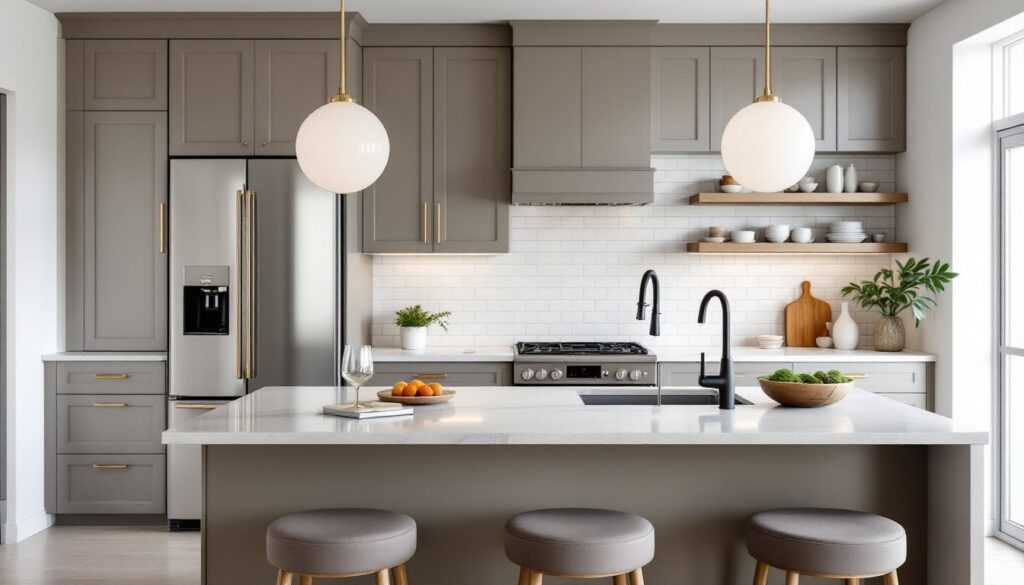
The core of modern luxury aesthetics rests on restraint paired with exceptional materials. You’ll see flat-panel cabinetry in matte finishes, open shelving that displays curated dishware, and integrated appliances that disappear into the design scheme. Hardware is minimal and intentional, think slim bar pulls or edge-grips that feel substantial without being showy.
Lighting plays a crucial role here. Recessed fixtures work alongside designer pendants and sculptural undercabinet lighting that serves both function and ambiance. The overall effect feels lived-in rather than showroom-sterile, with room for personality alongside polish. When you’re evaluating modern luxury kitchen designs, look for spaces that whisper rather than shout their elegance.
Premium Materials and Finishes That Define Luxury
The difference between a nice kitchen and a luxury kitchen often comes down to material choices. Premium materials signal quality and durability while creating the tactile richness that elevates the everyday experience.
Cabinetry forms the visual foundation. European frameless construction allows for larger door panels and seamless proportions. Lacquered finishes (in matte or soft-gloss) provide a contemporary edge, while natural wood veneers in walnut or light oak add warmth and authenticity. Edge-banding details matter, full-stile construction and soft-close hardware are standard in luxury builds.
Appliances should be professional-grade or semi-professional. Stainless steel remains the luxury standard, though black stainless and integrated panel-ready options are gaining traction. Built-in refrigeration, separate ovens, and commercial-style range hoods create a serious culinary environment. Brands like contemporary luxury designs showcase how integrated appliances disappear into the cabinetry.
High-End Countertops and Backsplashes
Countertops are both practical and sculptural. Quartz offers durability and consistent appearance: honed or leathered finishes feel more refined than polished. Marble brings luxury but demands care, seal regularly and accept that patina is part of its story. Granite in deeper tones (absolute black, deep blue) feels more contemporary than lighter variegated patterns.
Install countertops with an overhang of 12 to 18 inches for seating areas, this becomes a social hub in luxury kitchens. Waterfall edges (where the countertop material continues down the side of a kitchen island) are a popular 2026 detail that costs more but creates visual drama.
Backsplashes balance function with design. Large-format tile (24×24 inches or bigger) with minimal grout lines reads as sleek and sophisticated. Subway tile feels timeless when paired with matching grout. Hand-finished tiles add artisanal warmth. Some designs skip the backsplash entirely, using a full-height tile or stone surround, a bold move that requires disciplined maintenance.
Smart Kitchen Technology Integration
Modern luxury kitchens function as smart hubs where technology enhances without overwhelming. Integration is the key, appliances communicate with your phone and home automation systems, but the technology shouldn’t feel intrusive.
Smart appliances let you preheat ovens remotely, receive alerts when the refrigerator door is left open, and get notifications when groceries are running low. Some high-end models include built-in recipe guidance and integrated streaming services. These features aren’t gimmicks in a luxury context, they’re about convenience and precision in meal prep.
Integrated charging stations for phones and tablets blend seamlessly into cabinetry using pop-up or drawer-mounted mechanisms. These keep countertops clear while keeping devices accessible.
Wine coolers and beverage refrigeration are smart luxuries. Temperature and humidity control ensures wine stays in perfect condition. Some units sync with your phone to tell you what’s in stock.
Faucets with smart features offer voice-activated water temperature and flow control. Look for models that feel premium to the touch, weight and mechanism matter here. Explore luxury home technology solutions for comprehensive ecosystem options that integrate lighting, climate, and security alongside kitchen appliances.
Under-cabinet lighting that adjusts color temperature supports both task work and ambient mood. Some systems sync with circadian rhythms or adjust based on time of day, subtle but genuinely useful touches.
Layout and Functionality for Modern Luxury Kitchens
Luxury kitchens demand smart layouts that reduce clutter and unnecessary steps. The work triangle (sink, stove, refrigerator) still matters, but modern designs often add secondary work zones.
Island placement is critical. A 4-to-6-foot island provides seating and work surface without feeling cramped. In larger kitchens, islands can incorporate a second sink, cooktop, or prep zone. Ensure 36 inches of clearance on all sides for comfortable movement, this is building code minimum, but luxury kitchens often exceed it.
Pantries return in luxury designs, often as butler’s pantries with secondary refrigeration and beverage stations. This keeps daily cooking clean and focused while relegating bulk storage elsewhere. Custom pullout systems with labeled sections maximize functionality without visual noise.
Workflow zones separate cooking, prep, and cleanup. A prep zone near the fridge, a cooking zone near the range, and a cleanup zone centered on the sink reduce cross-traffic and frustration. Some luxury kitchens add a coffee or beverage bar as a distinct zone.
Seating should feel intentional. Bar seating at the island, a breakfast nook, or a small dining table integrated into the kitchen all work, the key is not forcing seating into awkward leftover space. When planning layouts, consider luxury home listings to see how well-designed kitchens in high-end homes manage transitions to adjacent dining or living areas.
Color Palettes and Design Trends for 2026
2026 luxury kitchen color trends lean toward sophisticated neutrality with bold accent potential. The shift away from ubiquitous white kitchens reflects confidence in personal taste rather than trend-chasing.
Warm neutrals dominate, greige (gray-beige hybrids), soft taupe, and creamy whites replace stark whites. These feel luxe without aging out. Pair warm cabinets with cooler countertops (pale marble or cool-toned quartz) for dimensional sophistication.
Deep jewel tones work as accent cabinetry in island or perimeter sections. Deep forest green, navy, and charcoal-black paired with brass hardware and warm lighting create drama and depth. This works especially well in larger kitchens where you can dedicate accent zones without overwhelming the space.
Matte finishes across cabinetry, hardware, and fixtures reflect a move away from high-gloss surfaces that read as dated. Matte black faucets, brushed brass handles, and flat-panel cabinet faces create visual quiet.
Natural materials showcase their own color, walnut wood cabinetry, terrazzo or natural stone countertops with their organic veining, and tile in earth tones bring authenticity. This approach ages beautifully because it embraces material character rather than fighting it.
For broader inspiration on luxury home design philosophy, resources like the 32 most beautiful luxury kitchens showcase how top designers use color and material to create timeless luxury spaces.
Lighting and Ambiance in Luxury Kitchen Design
Lighting transforms a functional kitchen into an ambiance-rich experience. Luxury kitchens layer multiple light sources to handle task work, general illumination, and mood-setting.
Ambient lighting provides overall brightness, typically recessed downlights (4-inch or 6-inch fixtures, 4 to 6 feet apart) spaced in a grid or arranged to avoid shadows over work zones. Dimmers let you adjust intensity throughout the day and evening.
Task lighting focuses on prep, cooking, and cleanup areas. Under-cabinet LED strips eliminate shadows on countertops and feel crisp and professional. Over-island pendant lights should hang 30 to 36 inches above the countertop, high enough to see clearly, low enough to create visual impact. Choose fixtures with real weight and finish details.
Accent lighting highlights architectural features, backsplashes, open shelving, or architectural niches. Cove lighting (LEDs tucked into crown molding) softens the room at night and makes the ceiling feel less heavy.
Color temperature control matters in luxury designs. Warmer light (2700K) in evening modes feels intimate: cooler light (4000K) during day supports focus and clarity. Some systems shift automatically: others use app controls.
Fixture quality isn’t optional. Heavy, well-designed pendants and sconces in brass, gunmetal, or opal glass feel genuinely luxurious. Cheap hardware, no matter how trendy, undercuts an otherwise elevated space. Consider how luxury eco homes balance energy efficiency with refined lighting design.
Under-sink and under-appliance lighting adds layers that support functionality without visible light sources. These accents feel sophisticated rather than gimmicky when done with restraint.
Bringing It All Together
Building a modern luxury kitchen comes down to honesty about your needs, commitment to quality materials, and resistance to cheap shortcuts. Invest in construction details (cabinet joinery, hardware, countertop edge profiles) rather than flashy appliances. Choose finishes and colors you genuinely love rather than ones you think should be trendy. Integrate technology thoughtfully to solve real problems, not to impress.
The kitchens that feel most luxurious in 2026 aren’t the ones crammed with features, they’re the ones designed to work effortlessly, last for decades, and feel better each time you step into them.