Table of Contents
TogglePurple has moved beyond whimsical accent walls to become a signature color for sophisticated, luxury bedrooms. Whether you’re drawn to deep eggplant tones, cool lavenders, or rich plums, creating a high-end purple bedroom requires thoughtful planning around color selection, quality materials, and layered lighting. This guide walks through the essential steps to transform a bedroom into a refined retreat that feels both luxurious and genuinely restful. You’ll learn how to choose the right purple shade for your space, invest in quality foundations, design lighting that works for both mood and function, and add finishing touches that elevate the entire room.
Key Takeaways
- Choose a purple shade based on your room’s natural light and undertones—warmer purples suit north-facing rooms while deeper, cooler tones work best in south-facing spaces.
- Invest in quality bedding with Egyptian or Pima cotton at 400–600 thread count, plus high-end furniture pieces like solid wood bed frames and nightstands to establish a luxurious foundation.
- Layer your lighting with dimmable overhead fixtures, warm-toned bedside lamps (2700K), and accent lighting on separate circuits to shift from bright functionality to intimate mood.
- A luxury purple bedroom relies on restraint in accessories—choose one or two statement art pieces, quality area rugs in natural fibers, and intentional textiles like velvet and linen rather than cluttering the space.
- Incorporate substantial window treatments in real fabrics, natural elements like plants, and high-quality finishing touches such as wooden hangers and matching bedside water glasses to complete the refined aesthetic.
Choosing the Right Shade of Purple for Your Space
The first decision, and arguably the most important, is picking a purple that works with your room’s natural light, existing finishes, and personal aesthetic. Lavender, lilac, mauve, plum, eggplant, and aubergine are all purple, but they read completely differently depending on undertones and saturation.
North-facing rooms with cooler, indirect light benefit from warmer purples with red or pink undertones (think dusty mauve or soft plum). South-facing rooms with lots of natural light can handle deeper, cooler purples without feeling cave-like. Test paint samples on multiple walls and observe them at different times of day, morning light, afternoon brightness, and evening lamp glow all shift how a color reads.
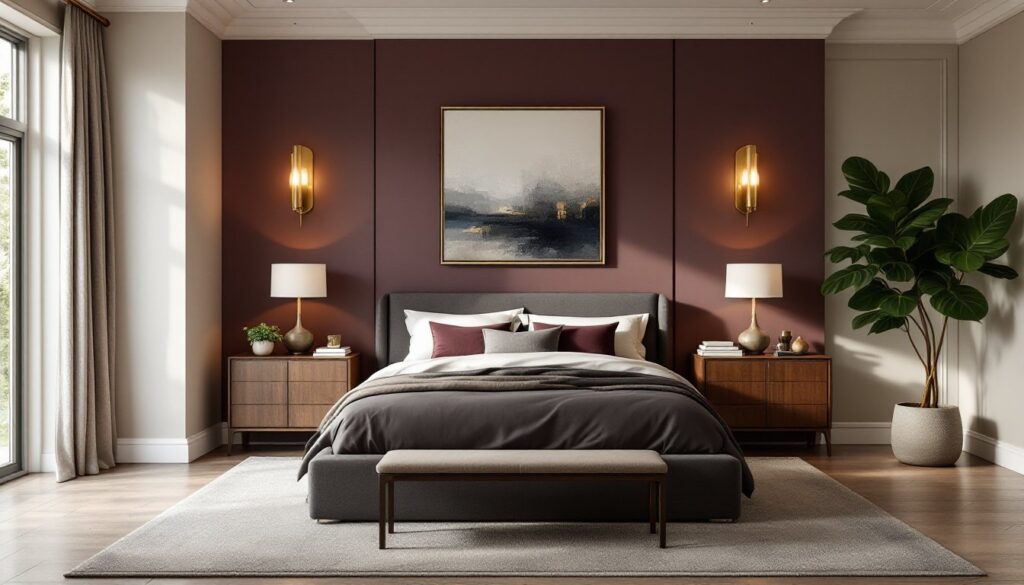
If you’re hesitant about committing an entire wall to purple, start with an accent wall or two. Many luxury bedrooms pair a deep purple feature wall with neutral adjacent walls in soft gray, white, or warm beige. This approach anchors the color psychologically without overwhelming the space. Darker purples (eggplant, aubergine) feel intimate and grown-up: lighter shades (lavender, lilac) read as serene but can feel less bold if that’s not your intention.
Consider the undertones of your existing elements too: wood trim, flooring, and hardware all influence how purple sits in the room. High-end interior design resources like Architectural Digest showcase purple bedrooms across multiple aesthetic styles, from contemporary to traditional, helping you narrow your preference before painting.
Creating a Luxurious Foundation with High-Quality Materials
A truly luxurious bedroom starts beneath the surface, with materials that feel expensive and perform well over time. This isn’t about chasing trends: it’s about investing in pieces that support sleep quality and durability.
Selecting Premium Bedding and Linens
Bedding is the foundation of bedroom luxury because you interact with it every night. High thread count alone doesn’t guarantee quality, fiber type matters more. Look for Egyptian cotton, Pima cotton, or linen in 400–600 thread count. Anything above 600 is often inflated counting (twist-ply manipulation) and doesn’t necessarily feel better.
Invest in deep, rich linens in complementary neutrals: charcoal gray, ivory, soft taupe, or even a darker plum that echoes your walls without matching exactly. A quality duvet cover in 100% cotton sateen ($150–300 depending on brand) creates a subtle sheen that reads expensive. Layering in a lightweight linen throw or silk pillowcases (both excellent for hair and skin) adds tactile luxury without breaking the budget.
Bed skirts often get skipped, but a quality upholstered bed skirt in a coordinating fabric hides underbed storage and adds visual weight. Don’t use thin poly-blend materials, they cheapen the look. Real cotton blends or linen perform and look substantially better.
Investing in Statement Furniture Pieces
A luxury bedroom needs a bed frame and nightstands that anchor the room. A low-profile upholstered platform bed or a wooden frame with thick posts communicates quality immediately. Avoid flimsy particle-board frames: solid wood or hardwood veneers age gracefully.
Nightstands should be solid, with real wood or quality veneer, and positioned at elbow height when sitting on the bed (typically 24–28 inches). A pair of matching nightstands creates symmetry and formality: mix-and-match works if both pieces are similarly elevated in quality and finish. Include a drawer for personal items, open surfaces feel chaotic in luxury spaces.
If budget allows, add a bedroom bench at the foot of the bed upholstered in a coordinating neutral or patterned fabric. This serves both function (a place to sit while dressing) and aesthetic (it grounds the bed visually and adds texture).
Lighting Design for Ambiance and Function
Luxury bedrooms need layered lighting: ambient (general), task (reading, dressing), and accent (mood and visual interest). A single ceiling fixture isn’t enough.
Start with dimmable overhead lighting, either recessed downlights or a low-profile flush mount in brushed brass, matte black, or satin nickel. Avoid cheap chrome finishes: they look dated. Dimmer switches are non-negotiable: they let you shift from bright (when cleaning or choosing outfits) to soft (for bedtime and ambiance).
Bedside lighting should be warm-toned lamps (2700K color temperature, not cool 4000K). Position lamps on nightstands for reading without overhead brightness. Consider 3-way bulbs or dimmer-compatible fixtures so you can adjust without getting out of bed. Clip-on reading lights are practical alternatives if nightstand space is tight.
Accent lighting, a wall sconce pair flanking a mirror, or uplighting behind a piece of art, adds sophistication and visual depth. Install these on a separate dimmer circuit if possible, allowing you to create intimate settings in the evening. Luxury home design trends increasingly emphasize layered, controllable lighting as essential to high-end interiors, not just nice-to-have.
Use warm LED bulbs throughout. They’re energy-efficient and cast a flattering light that makes the purple walls glow rather than look murky. Avoid flickering budget bulbs: invest in name brands (Philips, Lutron, or equivalent) for reliability and light quality.
Accessorizing and Styling Your Purple Bedroom
Once you’ve established color, materials, and lighting, accessories add personality and finish the luxury narrative. The key is restraint, too many pieces look cluttered: too few feels sterile.
A high-quality area rug grounds the bed and adds softness underfoot. Choose natural fibers: wool, jute, or sisal in neutral tones (gray, cream, charcoal) or subtle patterns. Avoid synthetic rugs: they cheapen the overall feel. A 8×10 or 9×12 area rug positioned under the bed creates visual boundaries without overwhelming the space.
Add accent pillows in varying textures: velvet, linen, silk, or knit in complementary purples, grays, and neutrals. Aim for 3–4 pillows on the bed (functional and decorative). Layer a throw blanket, cashmere, merino wool, or linen blends, at the foot for tactile luxury and visual interest.
Wall art should feel intentional. A large framed print, abstract painting, or mirror above the bed serves as a focal point. Purple bedroom design inspiration, so choose pieces that resonate with your aesthetic. Avoid small, scattered prints: one or two statement pieces read more expensive than a gallery wall.
Incorporate natural elements: a tall fiddle leaf fig or snake plant in a coordinating ceramic planter adds life and improves air quality. A wooden or marble side table, a vintage brass bowl, or a stack of coffee table books on a nightstand create visual warmth and texture.
Window treatments should be substantial: linen or velvet curtains in a neutral or coordinating shade, mounted close to the ceiling to maximize wall space and create height. Avoid thin polyester: real fabrics drape beautifully and age gracefully. If privacy permits, sheer curtains during day and heavier panels at night offer flexibility.
Final touches: high-quality hangers in your closet (wood or padded), matching bedside water glasses or a carafe, fresh flowers in a simple vase, and a quality wastebasket, these small details telegraph thoughtfulness and luxury throughout the space.
Conclusion
A luxury purple bedroom isn’t about expensive logos or trends, it’s about intentional choices in color, quality materials, and functional design that create a restful, beautiful space. Start with the right shade of purple, invest in bedding and furniture that feel substantial, layer your lighting, and accessorize with restraint and intention. The result is a bedroom that looks and feels like a genuine retreat, not a catalog spread.